Key figures
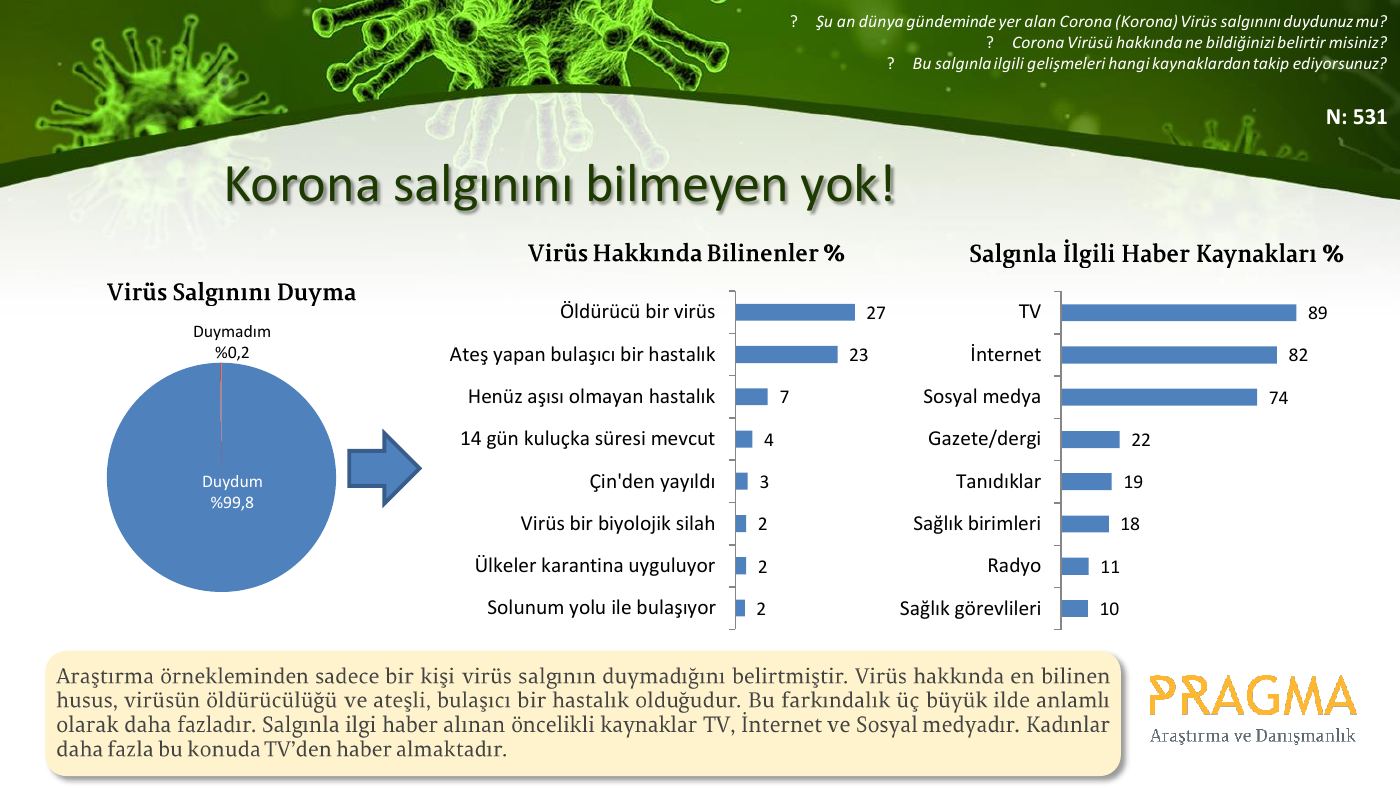
- 99.8%Had heard of the outbreak
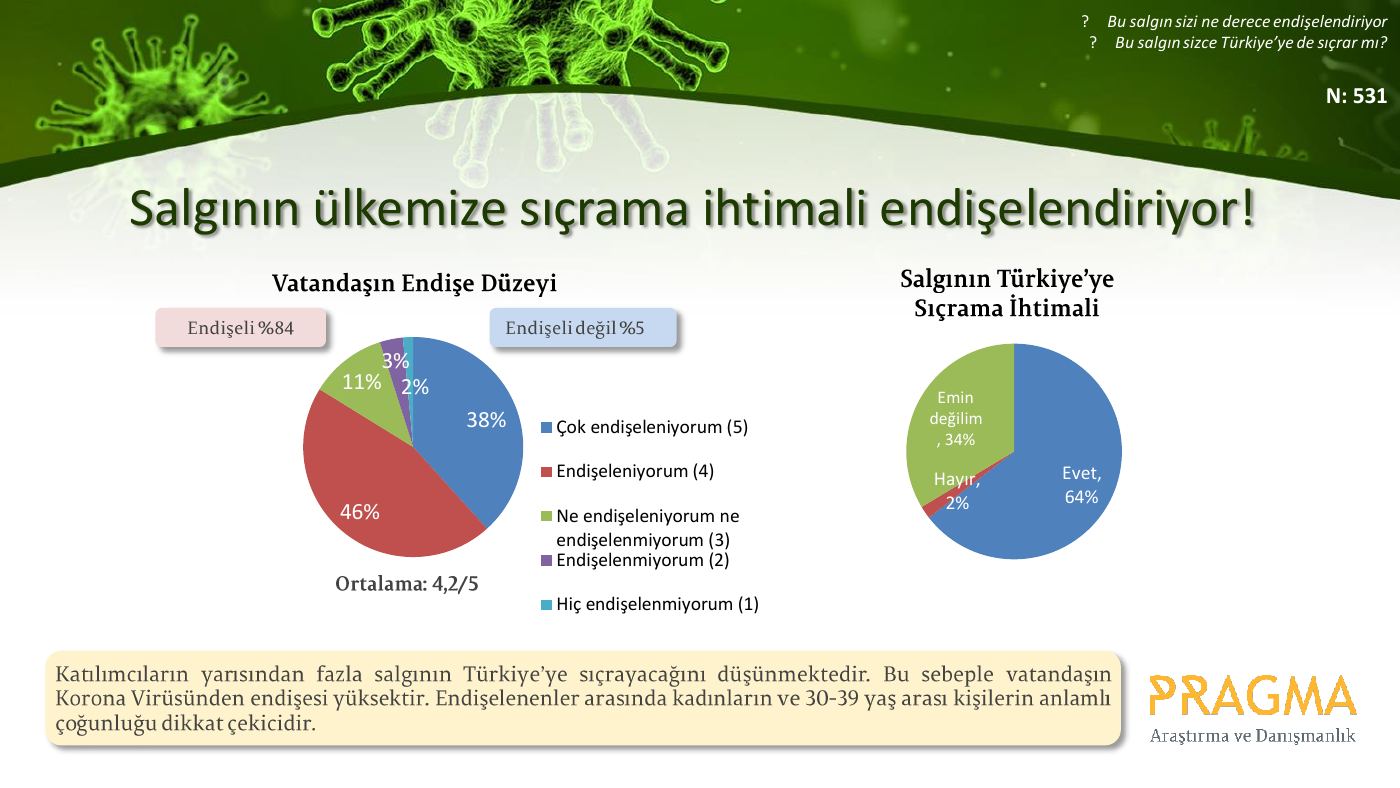
- 64%Expected the virus to reach Türkiye
- 76%Paying more attention to personal hygiene
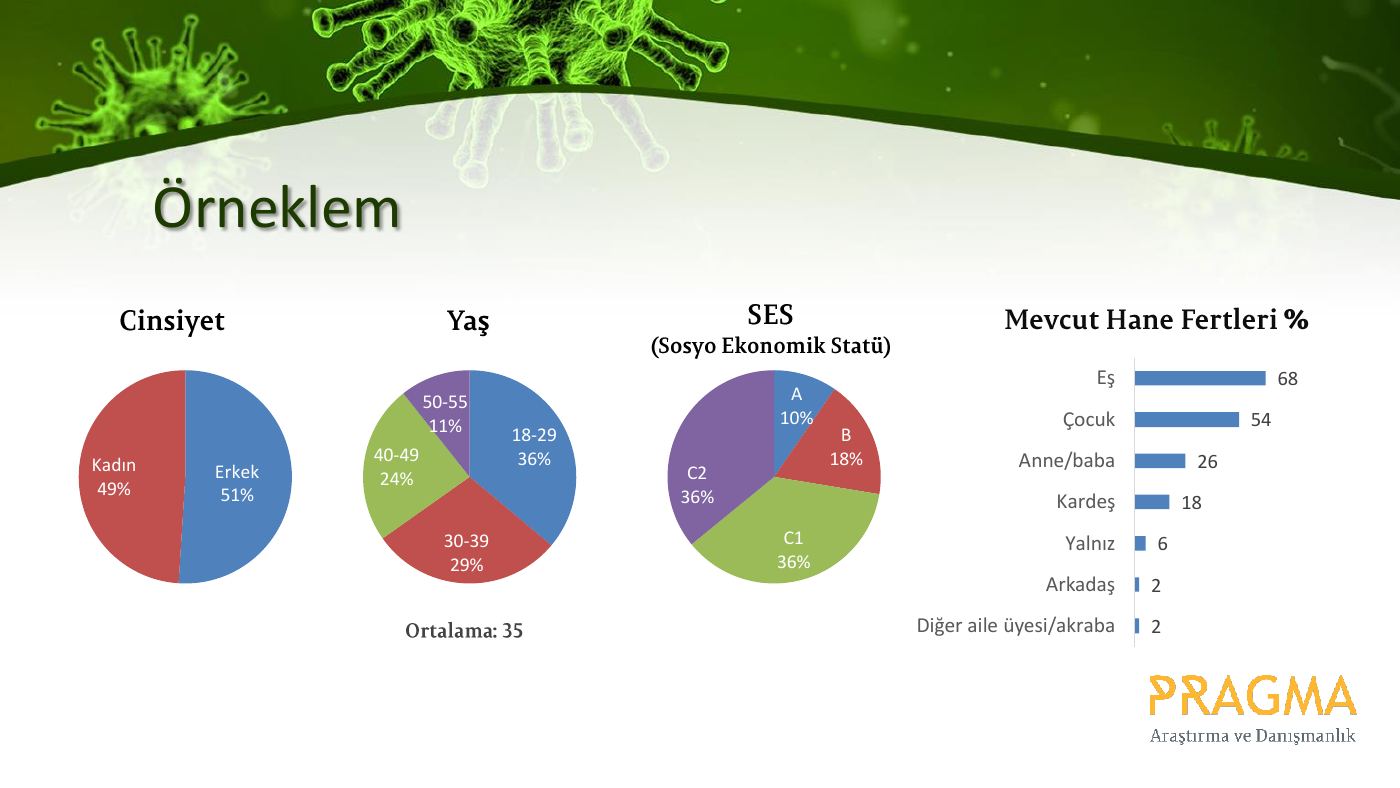
- 531Participants (nationally representative, ±4.25%)
Key findings
- TV (89%), the internet (82%) and social media (74%) were the main sources of information; only 18% cited health authorities.
- The virus was mostly described as “a deadly virus” (27%) and “a contagious disease that causes fever” (23%); awareness of its features was higher in the largest cities.
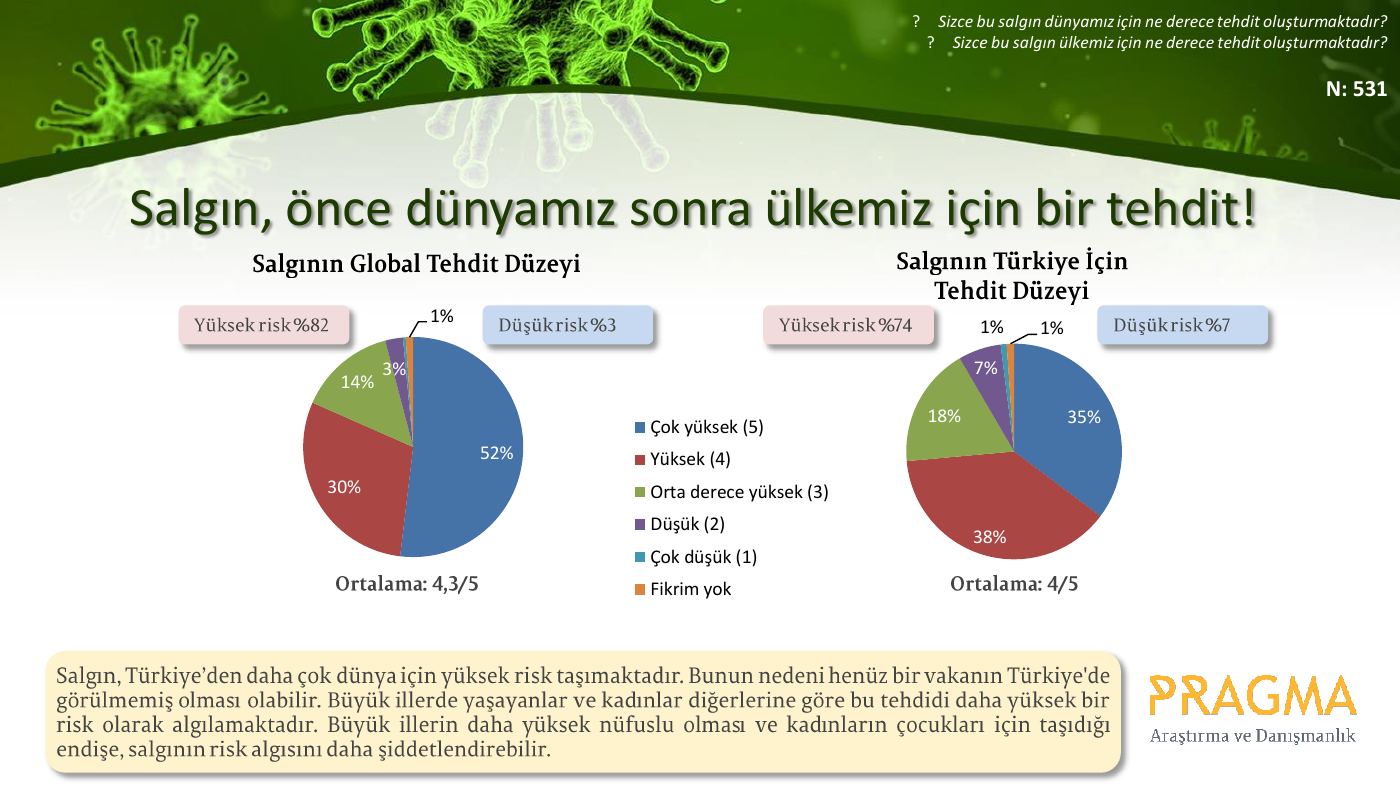
- The outbreak was seen as a higher risk for the world than for Türkiye; risk perception was higher among people in large cities and among women.
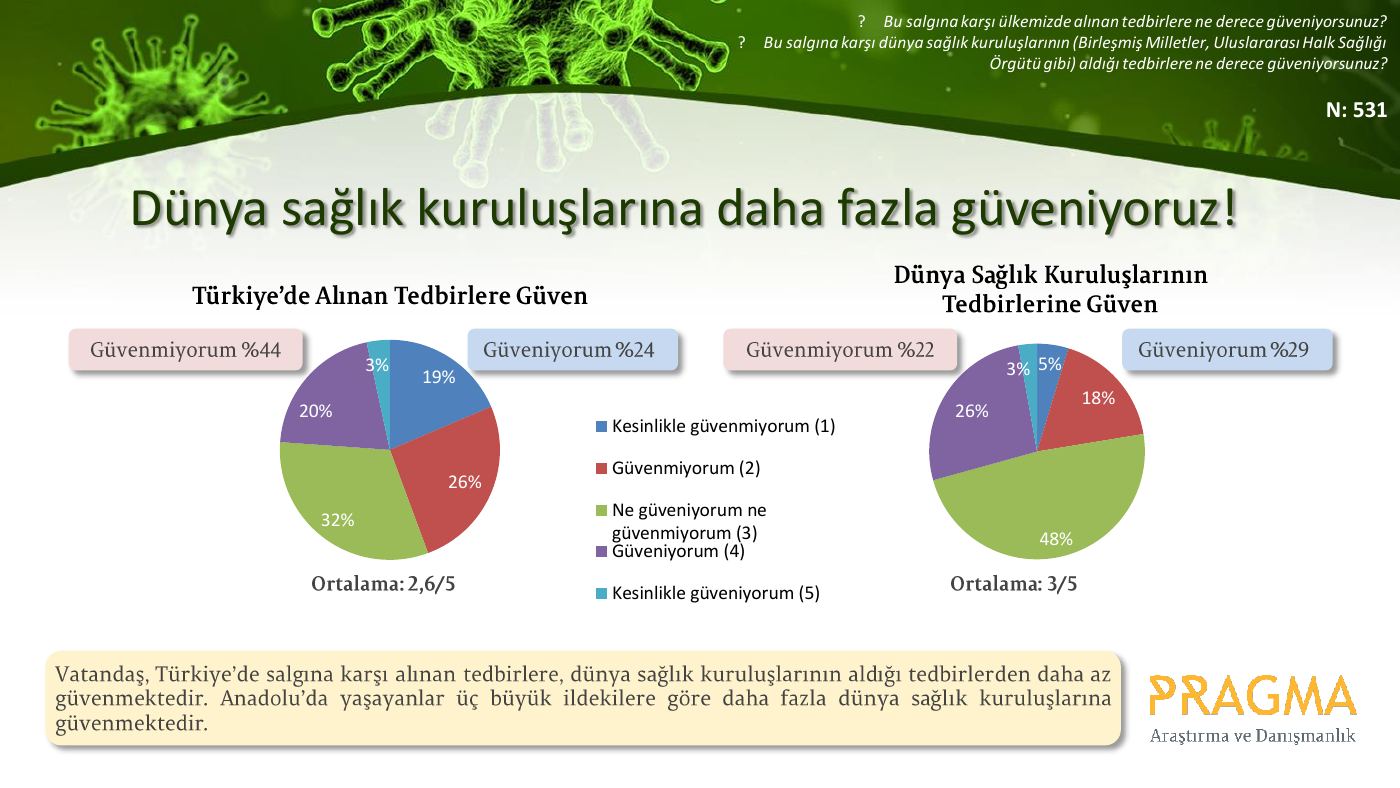
- Participants trusted the measures taken in Türkiye less than those of global health organisations.
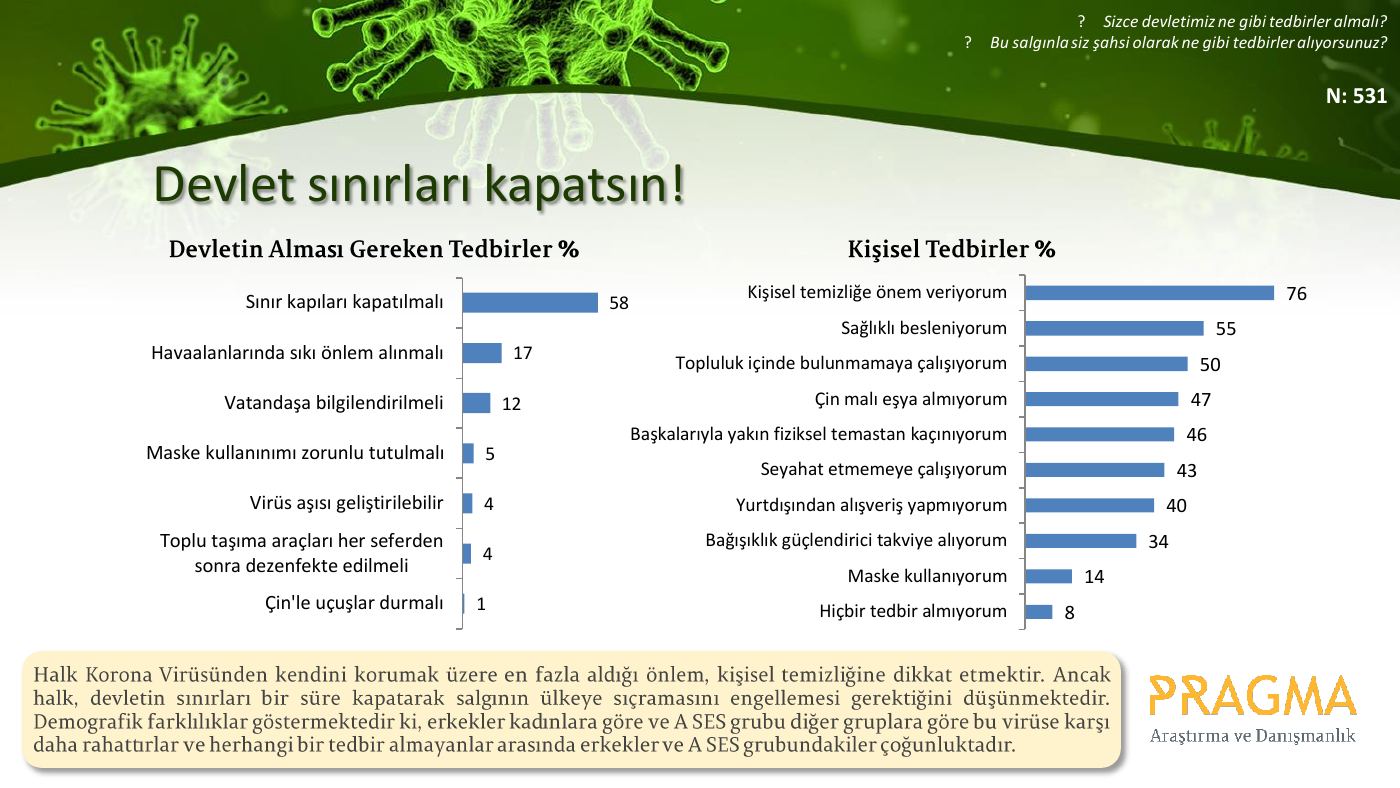
- Closing borders was the top expectation from the government (58%), followed by strict airport measures (17%).
- Personal measures: hygiene (76%), healthy eating (55%), avoiding crowds (50%); only 14% were wearing masks.
- 80% thought the outbreak would hit the world economy hardest; young people were more likely to say the media exaggerated its effects.
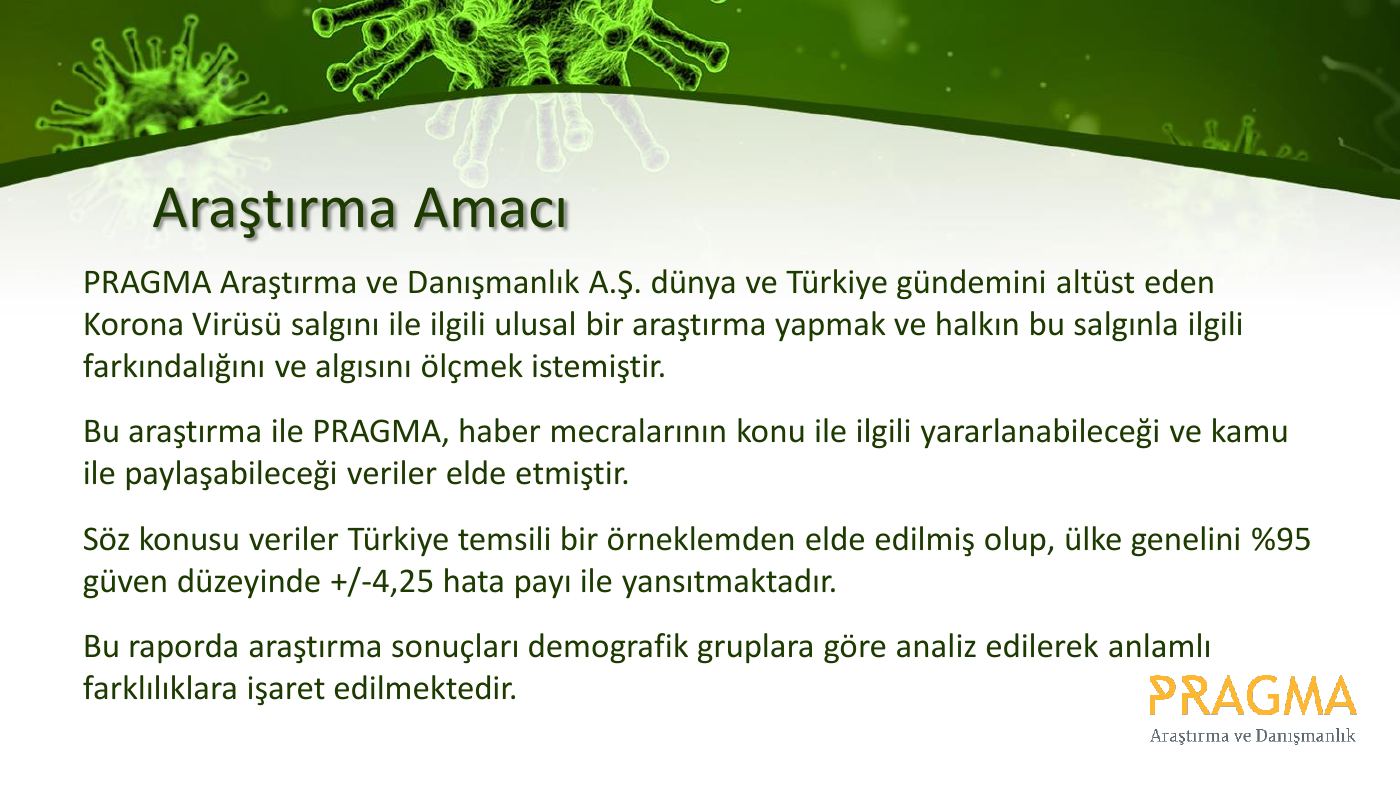
About the research
- Method
- Online survey (CAWI), PRAGMA online panel
- Date
- 24–28 February 2020
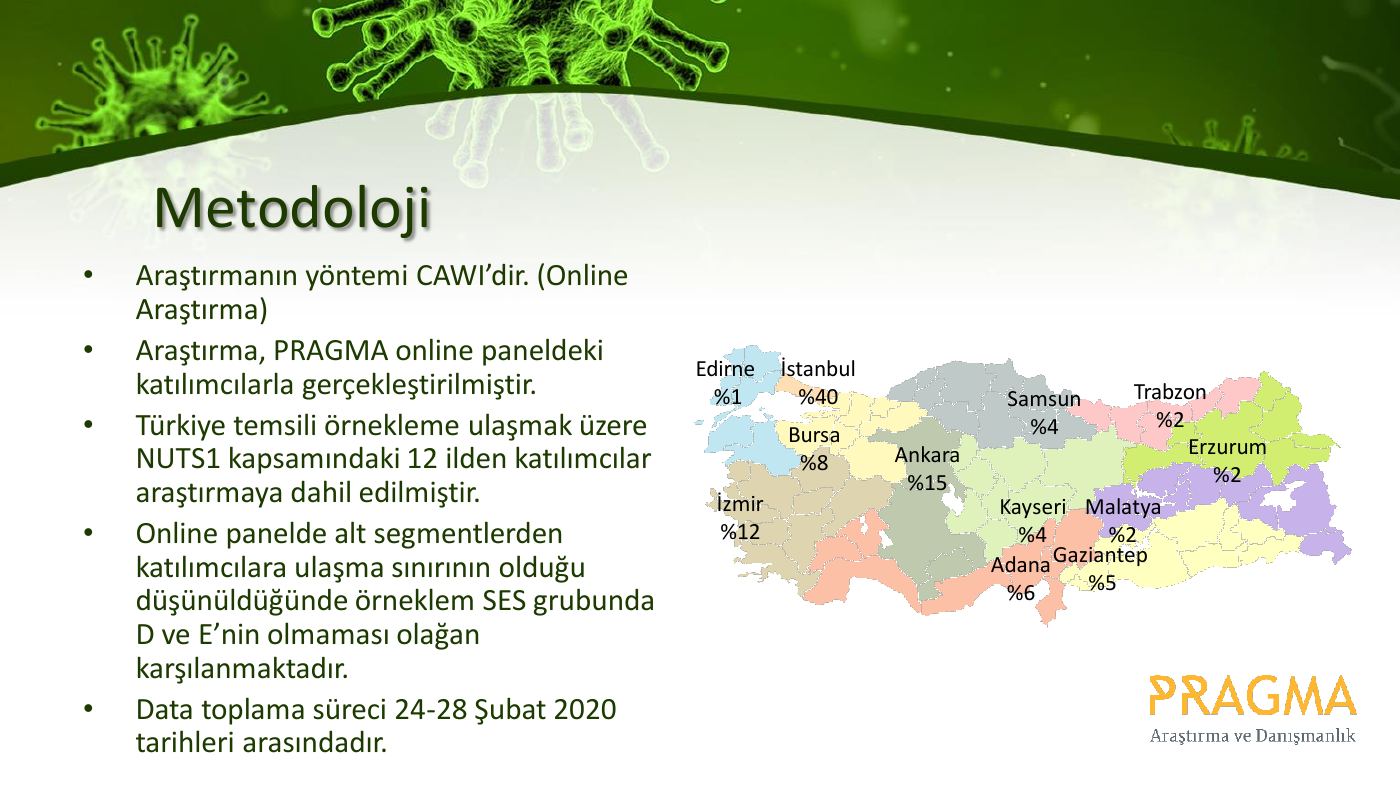
- Sample
- 531 participants from 12 NUTS-1 provinces; ±4.25% margin of error at 95% confidence
Pages from the report
First 12 of 16 pagesDownload the full report (PDF, in Turkish)